Can I Restart After a Long Break?
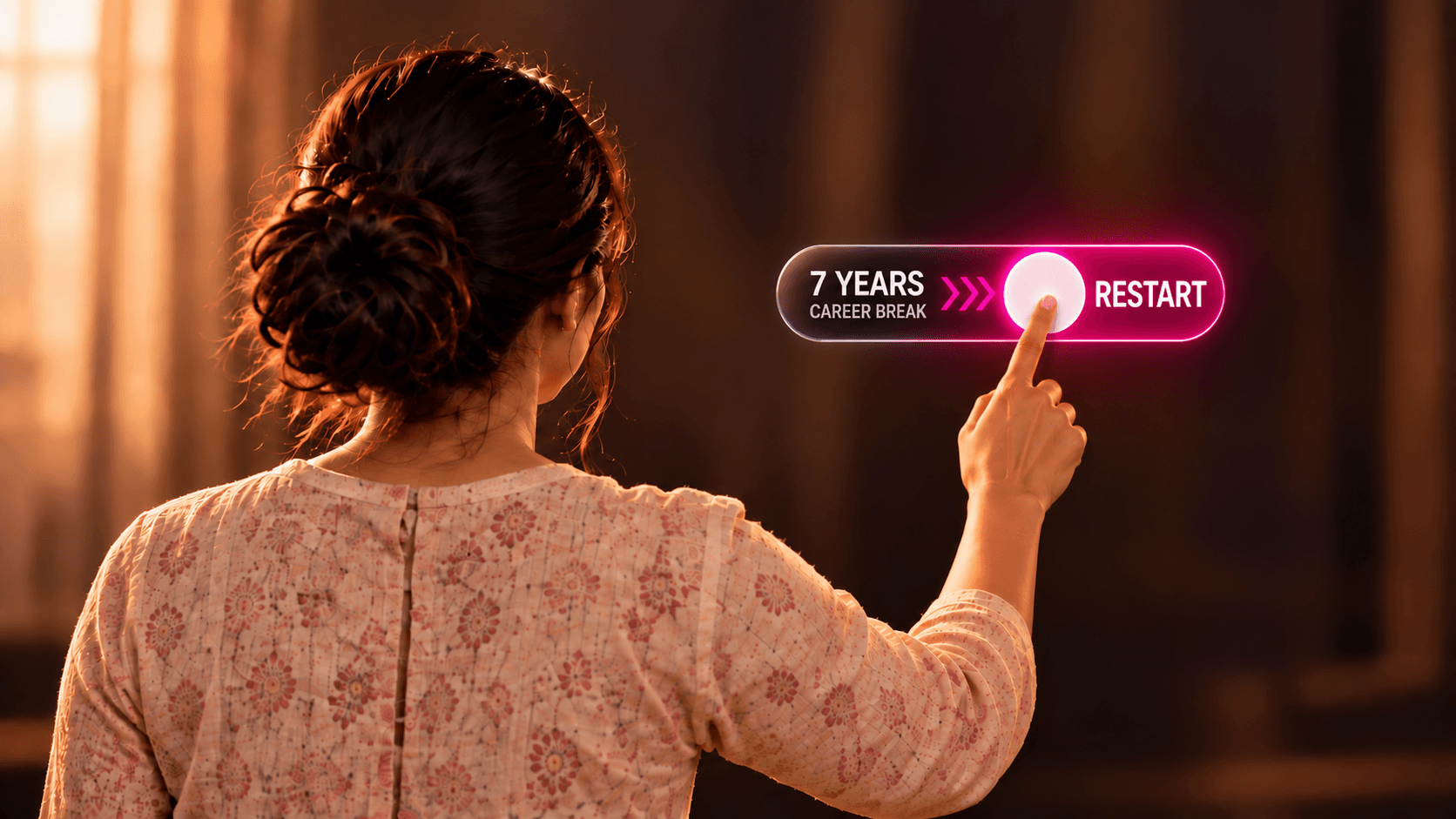

Turning a career break into a new beginning with courage, learning, and confidence.

If you've typed “can I restart after a long break” into a search bar late at night, you already know the feeling that mix of hope and doubt about whether the door back into work is still open. It is. This guide answers the question directly, then gives you the exact steps to act on it.
Can I Restart After a Long Break? Yes- Here's How
This is one of the most searched questions among women considering a return to work after a gap, and it deserves a straight answer: it is absolutely possible t two years away, at five years away, at ten years away, and beyond.
What decides the outcome isn't how long you've been out. It's the strategy you use to close the gap. Women who restart successfully tend to do three things differently:
● They reframe the break as part of their story, not a gap to hide.
Explaining the time away confidently and briefly removes the awkwardness that silence creates.
● They rebuild proof of current competence.
A short course, a certification, a freelance project or a volunteer role shows employers you're already back in motion.
● They target career-restart-friendly employers.
Returnship programs, women-focused hiring initiatives and skills-based roles are built specifically for people re-entering after a break, and they exist in far more industries than most people realize.
The women who restart successfully aren't necessarily the most qualified on paper. They're the ones who stopped waiting to feel “ready” and started taking small, visible steps back toward the workforce.
Why “Can I Restart After a Long Break” Is the Wrong Question to Get Stuck On
The most useful question isn't “Am I too late?” it's “What is the next practical step I can take to become current and visible again?”
Career breaks happen for many reasons: raising children, caregiving, relocation, study, health, personal priorities or a planned pause. None of them erase the experience you built before the break. Your task is to translate that experience into a story today's employers can understand and then add fresh evidence that you're ready to contribute now.
You do not need to turn the break into an apology. Explain it briefly, then move the conversation toward your direction, your refreshed skills and your recent action.
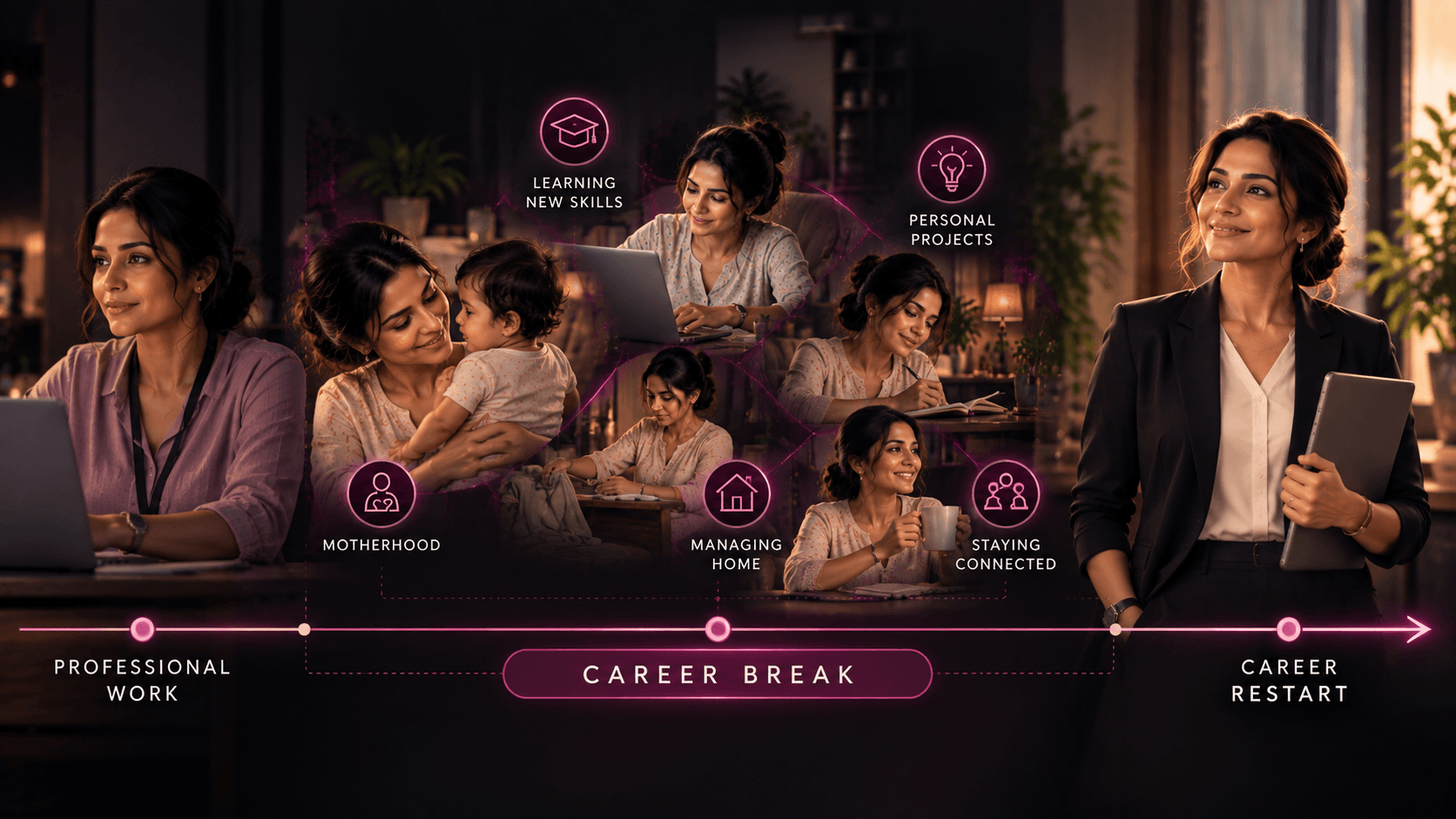
How Do Women Return to Work After a Career Break?
A practical career comeback becomes easier when you break it into stages. You don't have to complete every step before you start applying.
1. Reconnect With What You Want Now
Decide whether you want to return to your previous field, move into a related role, or make a bigger change. Weigh the work itself, schedule, location, flexibility, income needs and the kind of environment that fits your life now.
2. Refresh the Skills That Matter Most
Don't try to relearn an entire industry. Review current job descriptions for your target role and identify the two or three skills, tools or working methods that keep appearing. Focus your learning there, not everywhere.
3. Rebuild Your CV and LinkedIn Around Your Return
Your CV should show both the value of your earlier experience and evidence that you're active now. Add recent courses, projects, portfolio work, volunteering or relevant freelance work. Keep the career-break explanation short and factual one line is enough.
4. Create Visible Proof of Current Ability
A certificate helps, but proof is stronger when you can show what you can do. Build a small project, case study, portfolio sample or practical assignment related to your target role.
5. Start Applying Strategically
Prioritize roles that genuinely match your refreshed skills and current goals. Look for employers, returnships, flexible roles and skills-based opportunities where your experience is directly relevant.
6. Prepare Your Career-Break Story
Practice a brief explanation of your break and a confident transition to the present: why you're returning, what you've refreshed, and what you can contribute now.
How to Restart After a Long Break at Different Stages
After a 2-year break: The gap is often the easiest to close.
Focus mainly on updating tools and vocabulary that have shifted, and lead your applications with recent, relevant projects.
After a 5-year break: Start by comparing your previous role with today's version of it. Which responsibilities are still familiar? Which tools or expectations are new? This comparison gives you a focused learning plan instead of an overwhelming one.
● Choose one target role or a small group of closely related roles.
● Refresh the most frequently requested current skills.
● Update your CV and LinkedIn with recent activity.
● Complete at least one practical project that demonstrates current ability.
● Begin networking and applying while you continue learning.
After 10 years or more: The skills gap may be a little wider, but the core strategy is identical. Reframe the break, rebuild proof of current competence, and target reentry-friendly employers. Many women successfully restart after a decade or more away it takes a plan, not a shorter break.

Common Mistakes Women Make When Restarting Their Careers
● Waiting to feel “100% ready” before applying. Confidence usually comes after action, not before it the first application is often the hardest and least polished, and that's normal.
● Trying to close every possible skills gap before applying. This leads to endless preparation and no actual outreach. Target the two or three gaps that matter most for your specific target role.
● Leaving the career break unexplained on a resume. Silence invites assumptions. One clear, confident sentence about the break removes the guesswork for recruiters.
● Applying only to senior-level roles matching pre-break titles. A slightly adjusted level for the first restart role can rebuild momentum faster and often leads to promotion within the first year.
● Going through the process entirely alone. A career restart is significantly smoother with structured support mentorship, a community of other returners, or a formal returnship program rather than figuring out every step solo.
Frequently Asked Questions
1. Can I really restart after a long break, even after many years away?
Yes. Employers increasingly value the transferable skills, maturity and resilience gained during a career break. With a targeted plan updated skills, a reframed resume, and reentry-focused applications restarting after years away is genuinely achievable.
2. How do I explain a career break in interviews without feeling embarrassed?
State the reason briefly and confidently one or two sentences then pivot immediately to what you've done recently to prepare for your return, such as courses, certifications or projects. Confidence in the delivery matters more than the specific reason.
3. Is it harder to restart a career after 10 years compared to 5 years?
It can require closing a slightly wider skills gap, but the core strategy is identical: reframe the break, rebuild proof of current competence, and target reentry-friendly employers. Many women successfully restart after a decade or more away.
4. What industries are most open to women returning to work after a career break?
Tech, marketing, healthcare, education and finance all have growing returnship and skills-based hiring programs, but reentry-friendly opportunities now exist across nearly every sector as more employers formalize return-to-work initiatives.
5. Do I need to take a course before I start applying for jobs?
Not necessarily before you start but pairing a short, targeted course with your applications strengthens your candidacy significantly. It shows employers you're already closing any skills gap rather than waiting to be taught from scratch.
You're Not Starting Over You're Starting Forward
A career break doesn't erase your professional identity; it pauses it. Restarting after a career break is less about proving you still “have what it takes” and more about translating what you've always had into a form today's job market recognizes. The skills are still there. The judgment is still there. What's needed now is a clear, structured path back in and that path exists, whether your break lasted two years or fifteen.
At She Starts, we built our entire platform around exactly this moment: the point where a woman decides she's ready to restart, and needs the courses, mentorship and community to make that restart real. If you're asking yourself “can I restart after a long break?” let this be your answer: yes, and you don't have to figure out how alone.