Which AI Programmes Can Help You Develop Remote Work Skills After a Career Break?


AI programmes to build remote work skills after a career break.
Remote hiring has changed what employers look for. A strong resume still matters, but companies hiring for remote roles now pay close attention to how well you work without supervision, how clearly you communicate, and how comfortable you are with digital tools. The good news is that remote work skills can be learned. They are not tied to age, degree, or how recently you held a job.
If you are planning a career restart after a break for caregiving, relocation, health, or any other reason, this guide is for you. It explains what hiring managers want, which skills to build first, and how AI tools can speed up your career comeback.
What Do Employers Expect from Remote Workers?
When companies hire for remote roles, they cannot see you at your desk. Instead, they look for evidence that you can deliver results independently. Most employers expect a few core things.
Reliability and accountability. Remote managers trust people who meet deadlines, keep promises, and flag problems early. Showing up on time for video calls and replying within a reasonable window signals dependability.
Clear written and spoken communication. In a distributed team, most work happens through messages, emails, shared documents, and calls. Employers value people who write clearly, ask good questions, and summarise decisions so nothing is lost.
Self-motivation. Nobody is standing behind you. Employers want people who can start tasks, stay focused, and keep going without constant reminders.
Comfort with technology. You do not need to be a programmer, but you should be able to learn new software quickly and solve small technical problems on your own.
Adaptability. Remote teams often span time zones and change priorities quickly. Flexibility and a willingness to learn are highly prized.

Top Remote Skills Companies Look For:
Here are the remote skills that appear again and again in job postings.
1. Communication
Communication sits at the top of the list for good reason. Remote communication is more deliberate than office communication because you cannot rely on body language or casual hallway chats.
Strong remote communicators:
• Write short, clear messages with a specific request or next step
• Share updates proactively instead of waiting to be asked
• Listen carefully on calls and confirm understanding
• Adjust their tone for chat, email, and video
If you have managed a household, coordinated a community group, or volunteered during a career break, you have likely practised these skills already. Learn to describe that experience in professional terms.
2. Digital Skills
Digital skills are the second pillar. Employers expect baseline comfort with:
• Email, calendars, and cloud storage such as Google Workspace or Microsoft 365
• Video conferencing platforms
• Spreadsheets and presentation tools
• Basic cybersecurity habits, such as strong passwords and spotting phishing emails
3. Time Management
Working from home means you set your own structure. Employers look for people who can prioritise tasks, estimate how long work will take, and avoid burnout. Techniques like time-blocking, daily to-do lists, and focused work sessions show that you can manage your own schedule.
4. Remote Tools Proficiency
Knowing the common remote tools makes onboarding faster, which employers love. Familiarise yourself with:
• Communication: Slack, Microsoft Teams
• Meetings: Zoom, Google Meet
• Project management: Trello, Asana, Notion
• Documents and collaboration: Google Docs, shared drives, Miro
You do not need to master every platform. Pick two or three in each category, practise them, and mention them on your résumé.
5. AI Skills
AI skills are quickly moving from “nice to have” to “expected.” Employers increasingly value people who can use AI assistants to draft, research, summarise, and organise work more efficiently, while still applying human judgment. We cover this in more detail below.
What Skills Are Needed for Work From Home Jobs After a Career Restart?
If you are returning to work, the skills needed for work from home jobs fall into two groups: updated technical skills and rediscovered strengths.
Updated technical skills. If your last job was several years ago, tools and workflows have probably changed. Focus on:
1. Cloud-based collaboration tools
2. Video meeting etiquette
3. Basic AI tools for writing and productivity
4. Role-specific software relevant to your target job
Rediscovered strengths. Many remote job skills for career returners are things you already have: problem-solving, negotiation, patience, multitasking, budgeting, and project coordination. These are valuable in any remote team. The key is to name them confidently on your résumé and in interviews.
A career gap is not a disqualifier. Many employers now run returnship and re-entry programmes because they recognise the maturity and focus returners bring.
Which Skills Support a Strong Career Comeback?
Career comeback skills combine practical abilities with mindset. These are the ones that make the biggest difference:
A learning mindset. Employers care less about what you did not know during your break and more about how quickly you learn now. Completing short online courses shows initiative.
Confidence in your story. Practise a short, honest explanation of your break and what you have done to prepare. Keep it positive and forward-looking.
Networking. Reconnect with former colleagues, join professional communities, and attend virtual events. Many remote jobs are filled through referrals.
Portfolio thinking. Instead of only listing past roles, show proof of skills. A small portfolio, a certification, or a freelance project can bridge a gap in your résumé.
Resilience. Returning to work can feel unfamiliar at first. People who treat early challenges as part of the learning curve tend to settle in faster.
Which AI Programmes Can Help Develop Remote Work Skills?
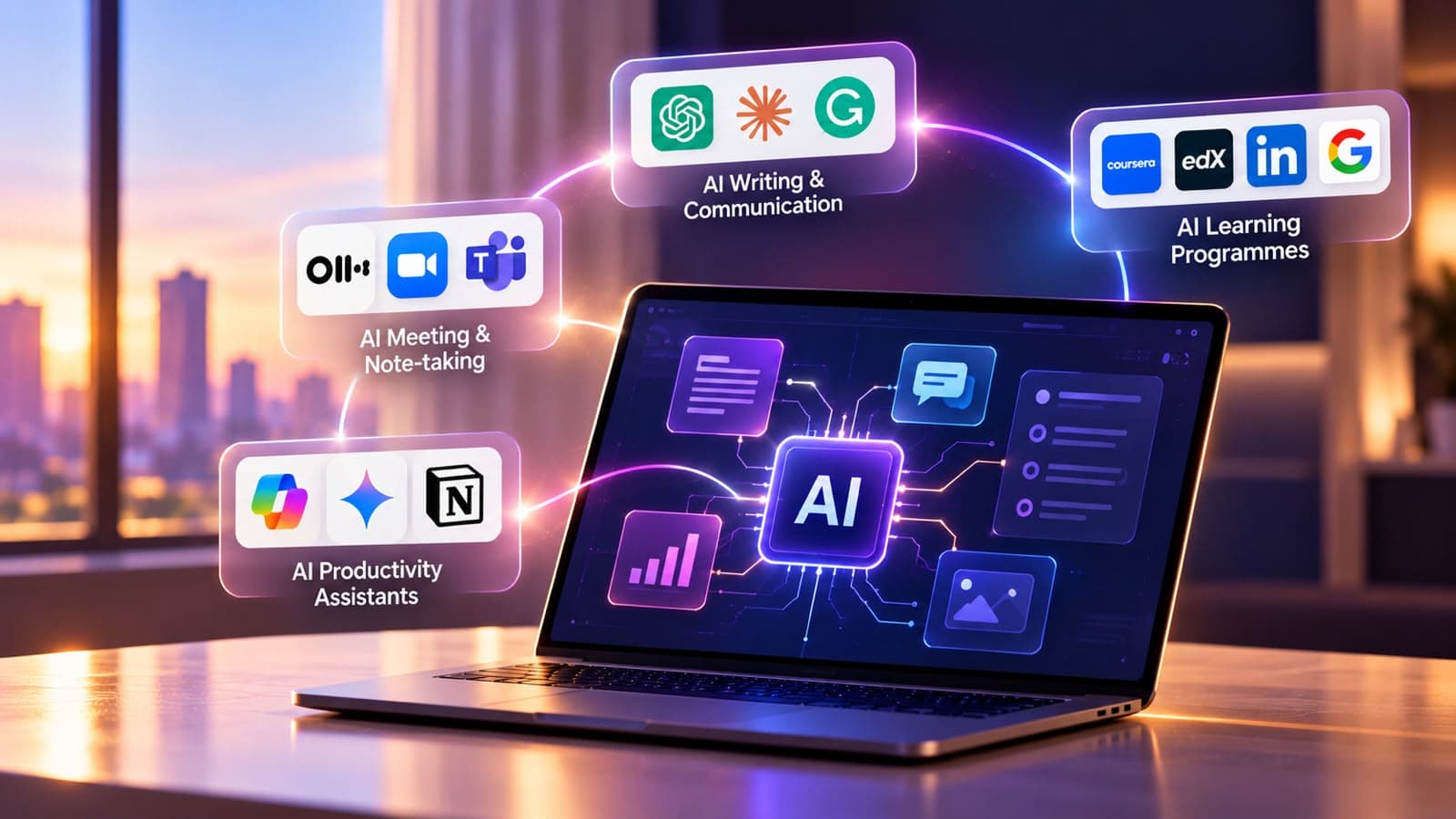
If you are wondering where to begin, AI programmes for remote work can act like a patient practice partner. Here are some categories and examples worth exploring.
AI writing and communication assistants. Tools such as ChatGPT, Claude, and Grammarly can help you draft emails, polish messages, and improve clarity. Ask an AI assistant to rewrite your update in a more professional tone, then learn from the edits.
AI meeting and note-taking tools. Platforms like Otter.ai and built-in meeting summaries in Zoom or Microsoft Teams record and summarise calls so you can focus on the conversation.
AI productivity assistants. Microsoft Copilot, Google Gemini, and Notion AI can help you organise tasks, summarise long documents, and build simple spreadsheets, which strengthens your digital skills while saving time.
AI learning programmes. Online platforms such as Coursera, edX, LinkedIn Learning, and Google’s free training pages offer beginner-friendly courses on AI fundamentals, digital marketing, data analysis, and project management. Many include certificates you can add to your profile.
Tips for using AI well:
• Always review and fact-check AI output before sharing it
• Never paste confidential information into public AI tools
• Be open with employers about how you use AI to improve your work
• Treat AI as an assistant, not a replacement for your own thinking
Building AI skills now signals that you are current, curious, and ready for modern workplaces.
Frequently Asked Questions
What are the most important remote work skills?
Clear communication, digital skills, time management, and comfort with remote tools top most employer lists. Adaptability and a willingness to learn AI skills are quickly joining them.
Can I get a work from home job after a long career break?
Yes. Many employers value the maturity and focus returners bring. Update your digital skills, add a recent course or certificate, and explain your break briefly and positively.
What skills are needed for work from home jobs after a career restart?
Start with communication, cloud-based collaboration tools, video meeting etiquette, and basic AI tools. Pair these with strengths you already have, such as problem-solving, multitasking, and project coordination.
Which AI programmes can help develop remote work skills?
AI assistants such as ChatGPT, Claude, and Grammarly help with writing. Otter.ai supports meeting notes. Microsoft Copilot, Google Gemini, and Notion AI help with productivity. Coursera, edX, and LinkedIn Learning offer structured courses.
How Can She Starts Help Women Develop Remote Work Skills and Restart Their Careers?
A career restart becomes easier to navigate when learning is connected to a clear professional goal.
She Starts supports women who want to rebuild their confidence, develop relevant skills, and explore opportunities to return to the workforce. Its career restart approach focuses on helping women move from uncertainty towards practical career preparation.
For women interested in remote work, developing the right skills is an important starting point. Depending on their goals and the learning opportunities available, they can focus on areas such as digital marketing, digital tools, AI-assisted productivity, professional communication, and practical project work.
A structured learning journey can help women identify suitable career pathways, practise essential skills, and prepare for job applications.
She Starts also emphasises the importance of learning through practical activities and building confidence step by step. Rather than waiting until you feel completely ready, you can begin with one relevant skill and gradually expand your capabilities.
If you are considering a career restart after motherhood, family responsibilities, or a long professional break, remember that you do not have to figure out every step alone. Seek guidance, practise consistently, and choose learning opportunities aligned with your career goals.
Your career break is one part of your story. Your skills, preparation, and next steps can help shape what comes next.
Final Thoughts
Companies hiring remote employees want people who communicate clearly, manage their time well, use digital tools confidently, and keep learning. If you are restarting your career, you already have more of these strengths than you think. Add a few updated digital skills, explore AI programmes that make your work easier, and share your story with confidence.
Your career comeback does not require starting from zero. It starts with the skills you already have and the next one you choose to build