Back to Work After a Career Break? Remote Job vs Office Job - Which Is Better for You?


Compare remote and office jobs to find the right career path after a break.
A career break doesn't mean your dreams have to take a break forever. Whether you stepped away from work to raise children, care for your family, manage personal circumstances, or explore a different direction in life, returning to work is possible. But when you're ready to begin again, one big question might hold you back: Should you choose a remote job or an office job?
Working from home sounds attractive when you want to spend less time commuting and manage your daily responsibilities. On the other hand, working in an office can offer structure, teamwork, and opportunities to learn directly from experienced colleagues.
So, when it comes to work from home vs office job, which is the better choice for women restarting their careers?
The answer depends on your lifestyle, skills, financial goals, and career ambitions. Let's explore both options to help you make a confident and informed decision about your career comeback.
Why Does Choosing the Right Job Matter After a Career Break?
Returning to work after a career break can bring a mix of excitement, hope, and uncertainty. You may want to become financially independent again, reconnect with your professional interests, or build a completely new career.
However, you might have questions such as:
* Will employers accept my career gap?
* Are my previous skills still relevant?
* Can I manage work and family responsibilities together?
* Should I return to my previous profession or learn something new?
* Which job offers the right balance between flexibility and career growth?
These concerns are common. Your responsibilities and priorities may have changed since you last worked, and your next job needs to fit your current situation.
Choosing between remote and office work is about more than deciding where you want to work. It's about finding an environment where you can use your skills, rebuild your confidence, earn an income, and grow professionally.
The good news is that you don't have to follow the exact career path you followed before your break. You can build on your previous experience, learn new skills, and explore opportunities that match your goals today.

What Is a Remote Job?
A remote job allows you to work outside a traditional office, often from your home. Depending on the employer, you might work entirely remotely, follow fixed online working hours, or have some flexibility in your schedule.
Remote employees commonly use digital tools, video meetings, messaging platforms, and online collaboration software to complete their tasks.
Some remote-friendly career options include:
* Digital marketing: Creating social media content, managing campaigns, and analysing performance.
* Virtual assistance: Supporting businesses with scheduling, email management, research, and administration.
* Content writing: Writing website articles, blogs, and social media posts.
* Customer support: Helping customers through chat, email, or phone.
* HR coordination: Assisting with recruitment, interview scheduling, onboarding, and employee documentation.
* Data analysis: Organizing information, preparing reports, and identifying business insights.
The qualifications and experience required vary by role. Some positions welcome beginners with relevant training, while others require specialized knowledge or previous experience.
For women restarting their careers, remote work can expand access to employment without requiring relocation or daily travel. However, securing a remote job still requires preparation, suitable skills, and careful research into genuine opportunities.
What Is an Office Job?
An office job involves working at an employer's physical workplace, where you usually interact with colleagues and managers in person.
For women returning to work, office-based employment can provide several benefits.
Face-to-face communication: You can ask questions, discuss challenges, and receive feedback directly.
Structured routines: Fixed working hours and a dedicated workplace can help establish a consistent professional routine.
Learning opportunities: Working alongside experienced colleagues may help you develop practical skills and understand workplace expectations.
Professional networking: Meeting colleagues, managers, and clients can help you build relationships and discover future opportunities.
Workplace resources: Depending on the employer, you may have access to training, equipment, mentoring, and team support.
However, office jobs can also involve commuting expenses, fixed schedules, and additional planning around family responsibilities.
This doesn't make office work a poor choice. It simply means you should evaluate the entire working arrangement before accepting a position.
Work from Home vs Office Job: Which Is Better After a Career Break?
Let's compare the two options across the factors that matter most when planning a career comeback.
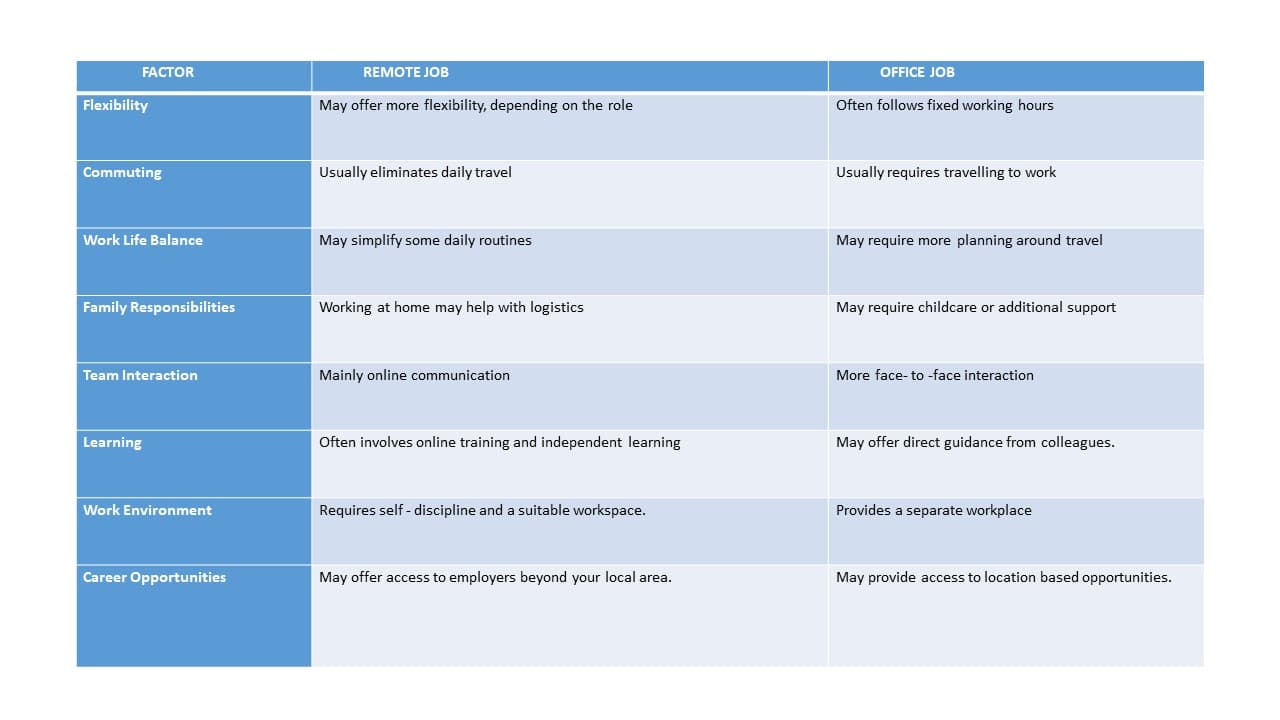
Neither option is automatically better. Remote work may suit women who value location flexibility, while office work may suit those who prefer direct interaction and structured routines.
Remember, working remotely doesn't always mean flexible hours, and office work doesn't always mean poor work-life balance. The actual experience depends on the employer, job responsibilities, and working conditions.
What Are the Benefits of Remote Jobs for Women?
Remote jobs can create valuable opportunities for women who want to return to employment while managing changing personal responsibilities.
1. Less time spent commuting
Daily travel can take up valuable time and money. Working from home removes the daily commute in many cases, leaving more time for professional tasks, learning, and personal routines.
2. More options for managing daily responsibilities
Some remote positions offer flexible schedules that help employees Organize their work around agreed deadlines.
For a mother returning to work, this may make planning school routines and professional commitments easier. However, remote jobs can also require fixed shifts, regular meetings, and strict deadlines.
Working from home is not the same as being available for household responsibilities throughout the day. A dedicated workspace, clear boundaries, and appropriate family support can make a difference.
3. Access to opportunities beyond your location
Women living in smaller towns may have limited access to certain specialized jobs nearby. Remote work can expand the range of employers they can consider, including organizations in other cities or countries.
Some positions have location, time-zone, language, or work-authorization requirements, so always check the job description carefully.
4. Opportunities to rebuild confidence
After a career gap, you might feel uncertain about your professional abilities. Refreshing your knowledge, practicing new tools, and completing practical projects can help you regain confidence.
This process is useful whether you eventually choose a remote position or return to an office.
5. Opportunities to learn modern skills
Many remote roles involve digital communication, online collaboration, problem-solving, and workplace software. Developing these skills can help you prepare for a wider range of professional opportunities.
The key is to choose learning that connects to real job requirements and your long-term goals.
Are Office Jobs Still a Good Choice for a Career Comeback?
Absolutely! A career break doesn't mean you must choose remote work.
An office role can be an excellent option if you want to return to your previous profession, learn from experienced colleagues, or benefit from a structured work environment.
For example, a woman returning to human resources might gain valuable experience by working with an HR team on recruitment, onboarding, employee operations, or workplace policies. A marketing professional might benefit from collaborating directly with designers, sales teams, and campaign managers.
Before accepting an office position, consider asking about working hours, training opportunities, support for returning employees, and possibilities for flexible or hybrid arrangements.
Choose the environment that supports your goals and fits your current responsibilities. Your career break should not limit the types of opportunities you consider.
Can AI Programs Help Women Restart Their Careers?
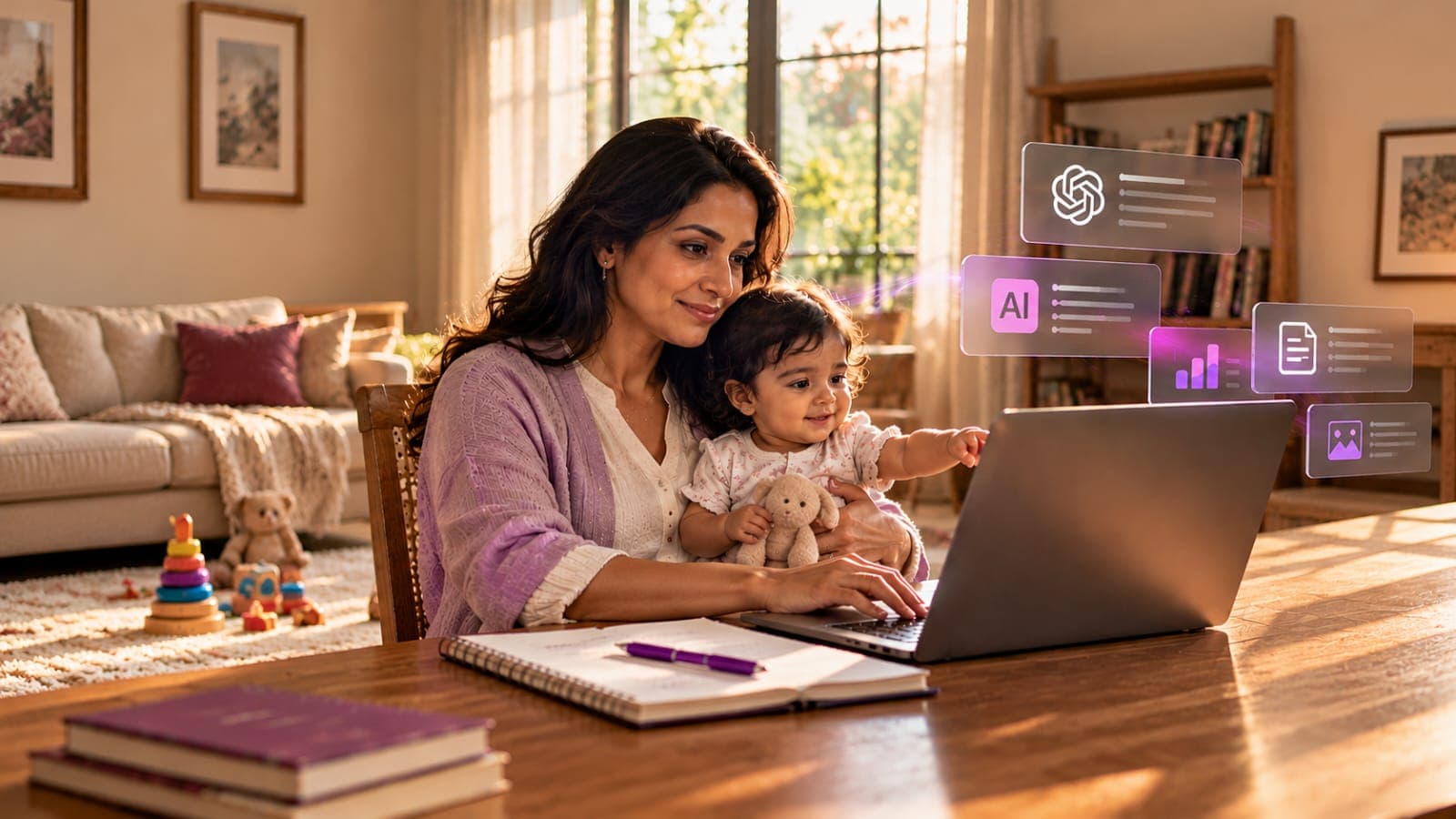
Today's workplace is changing, and artificial intelligence (AI) is becoming part of many everyday tasks. Learning to use AI responsibly can help women prepare for opportunities in both remote and office-based careers.
Depending on the career path, AI tools can support tasks such as:
* Digital marketing: Brainstorming content ideas, drafting posts, and analysing campaign performance.
* Human resources: Preparing job descriptions, organizing recruitment information, and creating onboarding materials.
* Virtual assistance: Researching information, drafting emails, and summarizing documents.
* Finance and administration: Assisting with spreadsheet formulas, transaction categorization, and report preparation.
* Data and reporting: Organizing information, exploring patterns, and preparing summaries.
AI tools are assistants, not replacements for professional judgement. Outputs must be reviewed for accuracy, privacy, originality, and suitability.
The workplace is changing rapidly, and Artificial Intelligence (AI) is becoming an important part of many industries. For women returning to work after a career break, learning how to use AI tools can be a valuable step towards rebuilding confidence, updating skills, and exploring new career opportunities.
Whether you prefer a remote job or an office-based role, AI skills can help you adapt to modern workplace requirements.
How She Starts Supports Women's Career Comebacks
At She Starts, women can explore AI-integrated programs designed to help them develop skills relevant to today's evolving workplace. These learning opportunities can help women refresh existing knowledge, explore new career paths, and practice using modern tools for practical tasks.
Instead of focusing only on theory, learners should look for opportunities to apply their knowledge through practical assignments, projects, and portfolio development. These experiences can help them demonstrate their abilities when applying for suitable positions.
For women who have been away from the workforce for several years, learning new skills can also be an opportunity to rebuild professional confidence and identify career options that match their current goals.
The best part is that AI-related skills can be useful across different working environments. Whether you want to explore remote jobs for women restarting careers or return to an office-based position, the right combination of technical knowledge, communication, and practical experience can help you prepare.
However, completing an AI program does not automatically guarantee employment. Your results will also depend on your skills, experience, job requirements, and the opportunities available.
Your career break doesn't have to define your next chapter. With the right learning approach, practical preparation, and support, you can take meaningful steps towards your career comeback.
Explore the AI-integrated program offered by She Starts and discover how developing modern skills could support your next professional step.
Suggested internal link: Link the words AI-integrated programs offered by She Starts to the relevant programs page on your website. Use the actual page URL when available.
Why practical AI training matters
Watching tutorials alone may not demonstrate your abilities to an employer. Practical assignments, realistic projects, and a portfolio can help you show what you have learned.
When choosing AI programs for modern careers, look for training that includes hands-on practice, relevant workplace tools, feedback, and responsible AI use.
Combining AI knowledge with communication, problem-solving, and role-specific skills can help you prepare for suitable opportunities. However, completing a course does not guarantee a job or a particular salary.
How to Choose the Best Job Type for Your Career Comeback
Still wondering which option is right for you? Start by evaluating your current needs.
Ask yourself:
* What does my lifestyle require? Consider your family responsibilities, available time, and preferred schedule.
* What skills do I already have? Identify your previous experience and transferable abilities.
* Do I need additional training? Research the skills required for the roles you want.
* What are my financial goals? Consider salary expectations, commuting expenses, and other work-related costs.
* Where do I work best? Decide whether you prefer independent work or face-to-face collaboration.
* What opportunities are available? Look for genuine positions that match your qualifications and circumstances.
For example, a mother who needs to reduce commuting might prefer a suitable remote position. A woman returning to HR might prefer an office role that offers direct mentoring. Someone changing careers might begin with practical training before applying for either type of job.
There is no single answer for every woman. Your best choice is the one that allows you to work sustainably while moving towards your professional goals.
Your Career Comeback Starts with One Step
Your career break is one chapter of your life, not the definition of your future.
You can return to your previous profession, explore a new field, work remotely, or choose an office environment. What matters is finding a path that suits your abilities, priorities, and ambitions.
Start by identifying your strengths, updating your CV, researching job requirements, and refreshing any skills that need improvement. If necessary, invest in practical learning and build examples of your work that you can discuss during interviews.
At She Starts, women can explore opportunities to develop relevant skills and prepare for their next professional chapter. Learning modern, AI-integrated skills may be one useful step towards building confidence and exploring new career possibilities.
You don't need to have everything figured out today. Start small, keep learning, and take one step at a time.
Your career comeback. Your choice. Your future.
Explore She Starts and take your next step towards a career that works for you.
Frequently Asked Questions
Are work-from-home jobs better for a career restart?
They can be a good choice for women who value location flexibility and want to reduce commuting. However, the best option depends on the job, working hours, responsibilities, and career goals.
Is remote work or office work better for a career comeback?
Remote work may suit women who prefer location flexibility, while office work may provide structured routines and in-person mentoring. Both can support a successful career comeback.
What are the benefits of remote jobs for women?
Potential benefits include reduced commuting, access to a wider range of employers, and flexibility in some roles. Remote work still requires time management, communication, and a suitable workspace.
Can AI programs improve opportunities in both remote and office careers?
Yes. Relevant AI training can help women develop practical skills in areas such as marketing, HR, administration, and reporting. Practical experience and responsible AI use remain important.
How can I restart my career after a long break?
Identify your existing skills, update your CV, research suitable jobs, and refresh your knowledge where necessary. Practical training, portfolio projects, and interview preparation can help you move forward.